Students make their own “slow” fast food

November 16, 2011 by  
Filed under Featured Multimedia, Features, Slideshow, Top Stories

On November 9th and 10th, English teacher Cherise Lopez’s third period American Literature class wasn’t in their normal classroom. Instead they were in the foods lab, making their own Egg McMuffins.

This activity was designed to show students how cooking their own food can be easy and healthier than buying fast food.  It didn’t come out of nowhere, though; the class had been thinking about their food choices for a few weeks.

“They read Omnivore’s Dilemma, and they can make it applicable to their own lives,” said Lopez about the project.

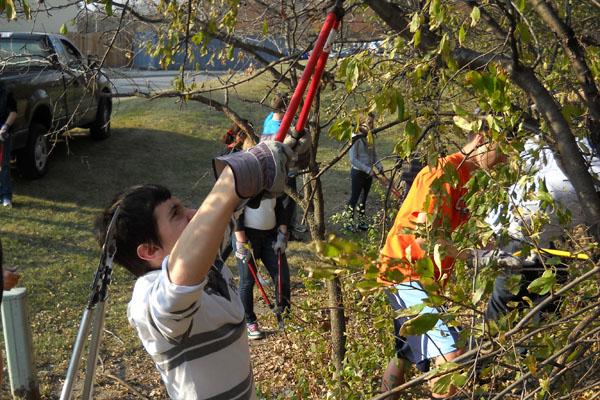
Omnivore’s Dilemma was a book, previously taught to SEE team, which looks closely at how food choices affect the environment, not just personal health.  As a part of that, last year’s SEE team went down to the foods lab to experiment with making healthier and more environmentally friendly fast food substitutes.

“I think the objective (of the non SEE team students) was the same because it was the same book,” said Patty Farlee, the Applied Arts teacher who showed the students how to use the foods lab. She added, “This is just a little sampling versus SEE team because they could expand on it more. This is just one unit.”

Overall, the project was enjoyed by students and teachers alike.

“I think it’s fun. It’s a cool experience to make your own healthier food,” said junior Shannon O’Connell.

“I’d already known how to cook, but it’s nice to know how to cook different stuff,” said junior Kevin Barney.

“I would attempt to make this at home,” junior Brittney JnoBaptiste said.

 “Overall I’m happy with how it came out.  I look forward to reading (the students’) reflections,” said Lopez.

The project is part of a larger sustainability arc that Lopez has been integrating into her classes. She tries to teach students how to connect sustainability ideas to the books they read in class, and how authors have written about the relationship between people and nature and how that connects to the students.

“It’s not just about the environment,” said Lopez. “It’s about how can human beings flourish and survive and how can we take control of our own lives.”

Packed house shows up to support SEE Team

November 16, 2011 by  
Filed under News, Top Stories

At the November 8th school board meeting, there was a pitch made by many students, parents and teachers to try to bring back the SEE Team.  The purpose of the presentation at the meeting was to inform the RB school board that there is a value and a reason that the team should be reinstated. 

SEE stands for the School of Environmental Education. The team was a unique experience for incoming freshmen that inspired environmental awareness, awareness of how interconnected everything is, and that offered a different way for students to learn. The program partnered with the Brookfield Zoo which is right next door to the school. The students who were part of the team would take time out of their day to do field work. They would restore forests, clean natural areas and volunteer in different ways, all somehow relating to the environment.

During board discussion after the presentation, two reasons were referenced for the original cutting of the team.  First, the team involved costs beyond a typical class, notably a number of field trips.  Assistant Principal of Curriculum and Instruction Tim Scanlon, who answered board questions on behalf of the team, also noted that, with RB’s growing class sizes, it would not have been efficient or fair to have significantly smaller class sizes in the team.  With 48 incoming freshman enrolled at the time of the team’s elimination last year, there would have been about 15 students in each SEE Team class as opposed to more than twenty in most non-SEE classes.  SEE Team students take a slate of classes together, including English, math, science, and wellness.

Scanlon also indicated during questioning that the SEE Team would be reorganized if it was reinstated, eliminating its Environmental Enrichment class.  This class served to help the team schedule larger segments of time for interdisciplinary learning, but may have been a road block to enrollment, since it forced incoming freshmen to give up an elective slot in order to join the team.  With the EE course removed, students would only be required to enroll in SEE Team English, math, science, and wellness, courses required for graduation even outside the team.

That aside, parents of SEE Team students, former SEE Team alumni, and community members involved with the team showed up to show their support and talk about why the team should be reinstated. Before the open forum for visitor comments, there were presentations done by several different people. One was done by Tim Scanlon. The next by Jennifer Waldock, Jame Holt, and Daniel Mancoff (the former SEE team teachers). The third presentation was done by Dr. Helena Puche from the University of Illinois at Chicago.

The meeting was so well attended that every seat in the Alumni Lounge was filled and the entire back was filled with standees. There were RB teachers there that were in no way affiliated with the team, former SEE Team members, parents of former members, and even people there that knew the SEE team because the team in some way had volunteered with them or helped them. Supporters of the team also included representatives from the Chicago Zoological Society, a member of the Environmental Protection Agency, a local owner of a green store, and two organic farmers for whom the students had done volunteer work in the past.

As visitor comments began, many people were motivated to speak. Overall nearly twenty parents and students spoke. The speaking just of the people concerned with SEE team took an hour and fifteen minutes. Multiple parents spoke about how SEE team helped their children transition into high school smoothly and helped foster their children’s growing love for different topics and desire to learn. Students spoke passionately about how SEE Team inspired them, made them better people and made their high school lives better.

Every visitor comment save one directly related to the reinstatement of the SEE Team.  The one additional comment was made by a community member advocating the reinstatement of the Math Club, also cut from the school’s programming.

As visitor comments ended, the vast majority of the audience for the board meeting departed as well.  Board members, including Board President Matt Sinde and newly elected Tim Walsh, noted in their comments that they supported the team philosophically, but called on parents, students, and teachers to work diligently to recruit a larger enrollment for the team in 2012-2013.  Walsh, in particular, noted that the team would be much easier to justify with an enrollment closer to 80 than 48.

Future in the budget balance

November 1, 2011 by  
Filed under News, Top Stories

Ever since the referendum failed last spring, the RB community has known that major changes would be made to the school and its budget. The largest cut in the budget came from teaching salaries which were reduced by $1.2 million. Other prevalent cuts were made to the drama department, which lost about 88% of its total budget, and the entire SEE Team. A whole array of other budget cuts were also implemented affecting sports, clubs, and smaller programs. Despite these reductions in the budget, the school is still operating with a deficit of $920,079 and the school will have to pull from its reserves to make up for this loss.

In an interview with Board President Matt Sinde, the Clarion asked him the following questions: Will there be a referendum this year? If so, will it be the same amount of money this year as last year? If not, what are the board’s strategies to maintain RB’s high standards? How does the board feel about the negative response from the community?

In response, Sinde said, “We will not have a referendum this year.” He also said that maintaining the school’s high standards “is a key priority” to ensure balance between financial responsibility and providing the students with a wonderful education. The lack of funds will cause this to be a challenging goal, but the board will be as “transparent as possible” and encourage “input from all stakeholders” as they begin the process of developing a new budget.

 Sinde does not believe that the community is opposed to helping the school. The community has shown through their vote on the past referendum that they believe the school can still provide a great education to the students without having to raise taxes.

With these thoughts in mind, the question is what will happen next? How will the school move forward? What direction will the board take to solve the budget crisis and how will they remain transparent throughout this process?

One avenue, having another referendum, is obviously not possible this year. The board has decided that their time would be better spent looking for other methods of funding. If the school were to propose a referendum question, it would have already begun the process. Sinde said, “In order to have a successful referendum you must be able to have enough time to educate the taxpayer which would require approximately 6-8 months.”

Another very unlikely possibility is renegotiating with the teachers and their union. Their contracts are not up for renegotiation until 2013, thus leaving salaries and stipends nonnegotiable.

Although the teachers are bound to the terms of their contracts, they are still committed to providing their students with the best education possible. Some have even resorted to creatively interweaving programs they used to run through a club into their curriculum. Bridget Wilmot, an English teacher, used to sponsor the literary magazine, Facets. Now that it has been cut from the budget, Wilmot said, “I don’t feel there’s as much of a creative outlet for students.” She has decided to allow activities, such as a wall full of students’ secrets and National Novel Writing Month to become open to the entire school rather than only her classes as a way to fill the void that she feels was left by its cut from the budget. Darel Gaser and Jeanne Sheehan, who were the directors of the school plays and musicals, also felt that they should create a program for the many students devastated by the large deductions from the drama budget. The result is a musical called, Lil’ Abner, which will be performed this fall at RB. The school will not support the production, but will supply the stage and equipment.

The school may also receive an $8.9 million grant from the state. If the school is awarded the grant money from the state, how will that money be utilized? Would that money allow a few clubs or sports to remain uncut or would it go towards the upkeep of the building? In an interview with Kevin Skinkis he said, “the goal would be to try to offset some of our financial difficulties, address some of the areas [in construction] that need to be fixed, and then look at our educational programs.” Hopefully by offsetting the school’s financial needs, some activities might be saved. Unfortunately, the likely hood of the state awarding the grant to the school is so slim that the school has to plan on not getting it.”

The option the board will most likely choose is continuing the budget cuts. Last year’s school board proposed an extensive plan that would cut most extracurriculars and many teachers over a two year period. This plan was available on the school’s website, but has been recently taken down without an explanation. This lack of explanation causes people to wonder about how much the board is willing to reveal as they decide the future of RB. Not having access to the plan also leads people to wonder if the board will continue the two year plan implemented by the previous board or if will it develop its own system?

RB’s future is resting on the leadership of its board and administration. The community relies on them to make difficult decisions and to instill confidence, but many are entirely new to this process. Skinkis is in his first year as superintendent. Pam Bylsma is in her second year as principal. Four out of the seven board members are in their first year. This group has their work cut out for them.

View from a former SEE teamer

June 3, 2011 by  
Filed under Columns, Opinion

SEE team has only been around for six years, but it had made a huge impact on those of us who decided to be a part of the program. The program is for freshman at RBHS who are interested in learning more about the environment. Instead of learning the regular curriculum, students learn to connect Math, Science and English to environmental themes. It has been a great opportunity for incoming freshman to try something different.

 SEE Team will no longer be available due to recent budget cuts.  There is no longer enough money to fund the program.

 In my opinion, SEE Team not only teaches students about current environmental issues or how important it is to respect our planet, but it also teaches teamwork and how important it is to respect one another. Students build strong relationships not only with the teachers, but also with the students. Freshman year is a crucial year in high school and having strong relationships with classmates and teachers makes a huge positive impact. It’s such a home like environment and it makes it so much easier to enjoy learning.

 “During my time in SEE team I meet a group of great people, and even greater teachers. I learned how to do new things and created opinions about myself and the environment,” said Danny Blackburn.

 Teachers Jame Holt, Dan Mancoff and Jen Waldock teach Science, English and Math while connecting environmental themes. There are 8 different themes that are taught over the course of the year such as interconnectedness, change, and diversity. In English different books are read such as Feed which is story showing how technology can take over and prevent us from seeing the real problems around us. A different book is read to represent each different theme. In science class students learn about the different plants and animal species that live in the area. Students also volunteer to clean up Baseball Woods and areas in the Zoo. 

 There are also many fieldtrips to the Zoo and many different projects throughout the year. Students volunteer downtown with Adopt a Beach which in an organization that help clean up beaches in Chicago.   Students also volunteer at scare which helps donate school supplies and used shoes to children that are in need. Other trips include waterfall glen, camping, fishing and Irons Oaks. The trips are great opportunities for students to have hands on learning. 

 “I loved SEE team so much. My favorite memory was going on a weekend camping trip with Mrs. Waldock and Mr. Holt. We spent the weekend away from everything and just having fun. I’m going to miss SEE team a lot,” said Julia Reyes.

 Unfortunately, the program has been cut but will definitely be missed by teachers and students. It’s an amazing experience for anyone looking for a nontraditional learning environment. It teaches you so much about environmental education and also about the importance of respect and hard work. The teachers went above and beyond to develop a quality program for students that have touched everyone that has been a part of it.

Save the SEE Team

May 19, 2011 by  
Filed under Opinion

I heard that one of the proposed cuts for the school next year is the elimination of SEE Team.  Please don’t cut it.

I have been in SEE Team all of this year, and it has been one of the best experiences of my life.  I have learned so much and have done so many things that I wouldn’t have if I wasn’t on the team.  I think everyone who comes to RB should have this chance.

SEE Team stands for the School of Environmental Education, and one of its primary purposes is to educate students about the environment.  Through a unique cooperation between our amazing Math, English, and Science teachers, as well as an elective period set aside for Environmental Enrichment, we get to discuss current environmental events, such as the pro’s and con’s of drilling for oil in Alaska or hunting wolves in Yellowstone National Park, and come up with our own opinions on the subject. 

Also, since environmental job opportunities are growing, one day we had our own career fair focused on people in the community with environmental jobs.  We got to ask questions and find out about the jobs of close to a dozen people, including the owners of a raw/vegan restaurant, a man who runs an organic lawn care service, and even someone who works for the EPA (Environmental Protection Agency).  This, especially, was a unique opportunity that only SEE team got, and is one of the best examples of how wonderful the program is.

The Environmental Career Fair, however, is not the only special experience in the team.  Early on in the year, we had the opportunity to go to Irons Oaks high ropes course.  Not only was this an opportunity to interact with nature, it gave us a chance to learn to trust the other members of the team and try something new.  We also went orienteering at Waterfall Glen, in small groups, which was another team-building activity, but also taught us a bit about survivingi n the wild.

Not all of the opportunities are as rugged as this, though.  During first semester, we worked on a “Cool Globes” project, which taught us a lot about researching an environmental topic and teaching it to our class.  Second semester we’re taking it even farther, by preparing for 25-minute environmental “how to” presentations that we will give at the Zoo for zoo staff, our classmates, and various other guests.  These projects, which I don’t think are being replicated in other freshman classes, give us valuable experience in research, public speaking, and educating others, which will undoubtedly be of use to us even after we’ve graduated SEE Team.

Also, SEE Team gets students to be involved with the local environment and the community.  This year we had scheduled six field trip work days in five different locations.  These included doing odd jobs at a local farm (the Golden Guernsey Dairy), participating in the Adopt-a-Beach program, and sorting donations at SCARCE recycling center.  One service day we went to Pure Prairie Organics, a small business (run by only two people) that sells only organic vegetables at farmers markets.  They estimated that in two hours, a third of us saved them seven hours of work.

One of our biggest volunteer projects is closest to home:  woodland restoration in the woods between the school and the zoo.  We have had numerous half-day field trips there to plant native species of plants and cut down invasive ones, and, weather permitting, we usually do some work once a week, during Biology.  Already we have seen a number of native plants, such as trilliums, growing where they had previously been choked out by the invasive European buckthorn.

In all these ways, SEE Team has been a valuable part of the community and local ecology this past year, and could continue to be so next year.

I have been incredibly lucky to be part of something like SEE Team.  Friends of mine who don’t go to RB have told me that they wish they had something like SEE Team at their school.  RB is so fortunate to be able to support this team.  It seems like a rare occurrence that a school would have teachers willing to be part of the team and a partnership with the zoo next door (which we’ve been quite involved with). 

SEE Team is an important part of what makes RB special, and it should be preserved and strengthened, not destroyed.  I realize that things will have to be cut, but I think SEE Team should be one of the last considered.

Katherine Alaks
Class of 2014

Vegan restauranteurs, EPA, and dairy farmers visit SEE Team

March 11, 2011 by  
Filed under News

SEE team is known to have fun field trips and environmental-based classes, but on Monday February 28, local people that are involved in environmental careers came to give SEE team a presentation on what they do.

The presenters had jobs from Brookfield Zoo workers to biology professors to dairy farmers and even RB’s assistant principal Tim Scanlon. But the biggest hit of the group were Danny and Kathy Living of Borrowed Earth Café in Downers Grove.

“Danny and Kathy were my favorite ones there. They were really cool and nice,” said freshman SEE team student Kate Alaks.

“The restaurant people were really awesome. They were so interesting,” said fellow SEE team student Justin Griggs.

Danny and Kathy’s restaurant is an all vegan café called Borrowed Earth Café. Vegans not only don’t eat meat, but there are no animal products such as dairy or eggs in the food either.

“We chose to open a vegan restaurant because we wanted to share the kind of food we eat with as many people as possible,” they said.

The owners have been vegan for six years and the restaurant has been open for three.

“Organic, vegan food has the smallest carbon footprint of any kind of restaurant. In addition, we compost all our food scraps during the growing season, we use corn and sugar cane take out packages, and bio-degradable take out bags,” they said.

Danny and Kathy do not have plans to expand their restaurant at this time. “We love our restaurant the way it is. Our customers consider us and our energy to be just as key an ingredient in the experience as the spices, nuts, seeds, vegetables and fruits that go into the recipes. The two tenets of our mission statement are feed and educate. While there’s something so truly American about expand and make a nationwide chain, trucks with your name on it, boxes in your grocery store, etc., there’s also something beautiful about something precious that’s appreciated in the size that it is without a desire to make it bigger,” they said.

The experience as a whole was great for everyone involved.

“I think the students really enjoyed being exposed to real people who practice the environmental topics they study in class. The panel discussion provided an opportunity for the students to ask questions to panelists and the students were engaged in a very natural back-and-forth conversation.  As a teacher, i was very excited to see my students take part in such a serious, adult-like activity,” said SEE team teacher Jennifer Waldock.

“We may play around with the format and allow for a informal mingling section, but we definitely want to do the panel again in some form,” Waldock said.

Eco-Action team expanding to make a difference

February 1, 2011 by  
Filed under Features

Science and SEE Team teacher Jame Holt has been working on a new group to make RB a greener school. This Eco-Action team has entered contests through the Eco-Schools program to make schools become more eco-friendly and save money on energy.

At the club’s beginning in November, there were about 10-12 students involved, with club creator Holt and assistant principal Tim Scanlon supporting it. They recently had a meeting with other faculty members to form a small committee of people interested in EcoSchools. Some faculty members that are now involved are Adam Gibbons, Jessica Mauritzen, Kathleen Harsy, Suzanne Bartelson, Mark Schaedel, Dan O’Rourke, Dave Monti, and Doug Schultz.

“I’m a member of the World Wildlife Foundation and the Nature Conservancy. I’ve always been interested in nature and the environment,” said Gibbons.

Each faculty member has a different role within the group.

“I’m in charge of research for the audit. There is a wind farm by Heston Wind that three schools are buying power from. I am going to try to find out if we can buy power from them as well,” said Gibbons.

The Eco-Action team is having an environmental auditor come to the school to audit the building to see how we are using resources and our ecological footprint. They will then recommend changes that the school should make. The audit should be done by spring break.

“I think it will be eye-opening for a lot of people to see how much we’re using. It will give us information of many misconceptions and myths regarding recycling, printing, and how we should be doing it,” said Holt.

There will be an assembly towards the end of February during science classed. Alliance for Climate Education (ACE) will be doing the presentation.

The Eco-Action team still has not heard results of the last challenge they entered through EcoSchools, but once they do, they will start looking for grant opportunities.

Any students or staff interested in this club should see Jame Holt in the science department.

2011 SEE Team trip to Yellowstone National Park

November 12, 2010 by  
Filed under News

Recently SEE Team announced that for their annual summer trip they would be attending Yellowstone National Park in Wyoming. Every year they provide a summer trip for students that are currently on SEE team and also previous members. This year however Eco Club and AP Environmental Science students are also invited to go and there is a maximum of 13 people allowed to attend.

 The trip is a great opportunity for students to be educated on the wild life living at the park. Previous years, SEE team has gone to places for the purpose of only site seeing but this year it’s an educational trip. Well at Yellowstone student will be studying different animal and plant species, such as wolves, bears, deer, sunflowers and lilies. Those are just some of the animal and plant species available to see at the park.

 Students and teachers will fly out of Chicago on July 9 to Montana and then take a bus to the park. The trip is nine days and eight nights of exploring and studying Yellowstone Park. SEE team is able to go through an organization called Ecology Project International. Students attending the trip are able to post questions about the trip on their website to get more information about the park.

 “I’ve never been able to go to Yellowstone, so to take the students there will be incredible.” SEE Team Teacher Jame Holt said.

 To raise money for the trip students are able to participate in fundraisers such as wrapping books at Borders and a rummage sale at RB in April. The money raised by the fundraisers will be divided among the students and given out to them to go towards paying for the trip. Another way for students to raise money is to apply for grants from the RBEF in April.

 If you miss the trip to Yellowstone Park this year, there will always be an opportunity to attend a different trip next year.

Rooftop garden: one step closer to a green school

November 9, 2010 by  
Filed under Features

English teacher Kathleen Harsy is the main advocate for a rooftop garden atop our very own RBHS. A rooftop garden is just what it seems to be: a garden on top of a building, used to grow vegetables and herbs, reduce energy costs, and just overall make greener choices.

Although Harsy is head of this project, there are many other people involved. Tim Scanlon, Kirstin Bacon, Tom Dignan, John Izaguirre, and the SEE team students and teachers Jame Holt, Jennifer Waldock, and Dan Mancoff are all involved in the garden, and will be reaching out for more support.

The purpose of a rooftop garden at RB is basically to have an interactive green space. Students can actually do something instead of just sitting and learning in a textbook. It expands on the fact that the green movement isn’t just a fad, but it is how the world really works now. The garden also creates interdisciplinary opportunities within the school, meaning that English could coincide with the science department in projects concerning the garden.

Harsy said “[The garden would] foster a new generation of environmental stewards.” There are connections to the Character Counts program with the garden, as well has being able to make direct lesson plans to reflect upon it.

“Kids get so excited about it. They think going up to the roof is so cool,” said Harsy.

A rooftop garden could reduce energy costs and allow students and staff to interact with a living ecosystem. Not only that, but students and staff could actually consume the vegetables and herbs that will be grown in the garden, which could improve the food choices in the cafeteria. 

Part of the funding for the garden is coming from last year’s senior gift, which is when the idea really got kicked off. It is not funded by the school, so Harsy and others are in the process of getting outside grants to fund the rest of the garden, which will be about $5000. 

The restaurant Uncommon Ground has a rooftop garden, and Harsy has been in contact with them about RB’s plans for one.

Safety is not an issue because the school already has easy and safe access to the roof.

“Administration is really open to this idea. It really speaks to how committed they are to the best practices for teachers and students,” said Harsy.

SEE Team students follow in Darwin’s footsteps

September 13, 2010 by  
Filed under Featured Multimedia, News, Top Stories

Every student at RB learns all about Charles Darwin and his theory of evolution as a freshman in biology. They learn all about his findings at the Galapogos Islands with the finches. But for a few RB students, they decided to take this lesson to another level with a SEE Team sponsored trip to the Galapagos Islands.

Three RB students took advantage of the once in a lifetime opportunity of visiting the famous Galapagos Islands. Seniors Caitlin Clark and Emily Cain, along with Sophomore Katie Maxwell were joined by teacher Jennifer Waldock on the ten-day trip.  This trip was offered to any member or former-member of the SEE team (School of Environmental Education), an alternate education plan that is offered freshman year that puts an emphasis on the environment. In past years, the group had gone to New Orleans to help with rebuilding the city, but they decided to change it up this past summer.

“After three summers doing that, we decided as a team to try something new,” said Waldock. “The Galapagos Islands are such an ecologically significant location so we thought it would be a perfect fit within the SEE Team goals to travel to the islands and study the rich plant-life and animal populations.” 

The group arrived in Quito, Ecuador on June 14, and spent the first day exploring the capital. They took a tour of Quito and saw many old churches and buildings including the Ecuadorian Statue of Liberty.  They were also shown the exact spot of the equator in Quito.  “Quito was different. The architecture had a nice mix of modern and old buildings and churches,” said Cain.

The next day, the group traveled to the main destination, the Galapagos Islands. It took about an hour and a half by plane to get to San Cristobal, one of 18 islands that make up the Galapagos. They would spend the remainder of the trip living on San Cristobal, Santa Cruz, and Isabella, the three main islands on the Galapagos.  

Since there are only about 20,000 people in the Galapagos Islands and tourists are limited, the islands are not overcrowded. Tourists and scientists aren’t the only people present on the island, there are towns home to natives on the island. ”There are developed towns on the islands, which I don’t think many people realize,” said Waldock. The sole reason that so many people want to go to the historic islands is the unique wildlife.

Maxwell said seeing the different animals was the best part of the trip. “The wildlife was very unique. It was interesting how (the Galapagos Islands) were the animals’ home, not the people.” On the trip, the students encountered penguins, sea lions, iguanas, blue-footed boobies, and of course, Darwin’s finches. In the highlands of San Cristobal, they saw many tortoises and were allowed get within a few feet of them. Even more animals were seen underwater when the group went snorkeling right off the islands.

Most of the activities that the RB kids did in San Cristobal involved the wildlife because there is no other place like the Galapagos and is a once in a lifetime opportunity. They went on day hikes on the islands and even hiked up a volcano on the island.

The food there was very different as it is South America, but the RB group agreed that they liked the change. They ate cold soups, fruit as a meal, and even had popcorn for a meal. Foods that they didn’t expect to be good, turned out to be a treat.

The group also went to the Charles Darwin research center and learned even more about his monumental findings. Now they can go back to RB and say they truly experienced Darwin’s evolution.

Next Page »