What was better? A Month of Service or a Day?

December 9, 2011 by  
Filed under News, Top Stories

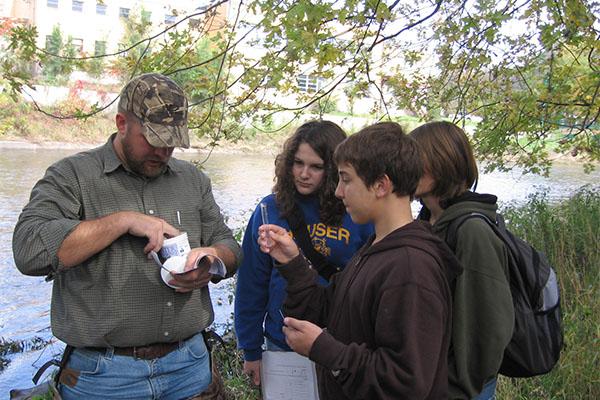
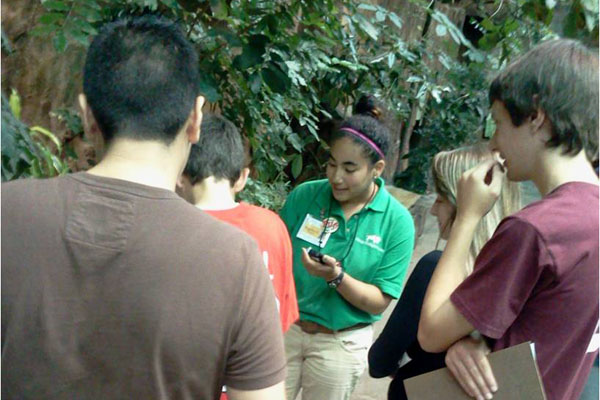
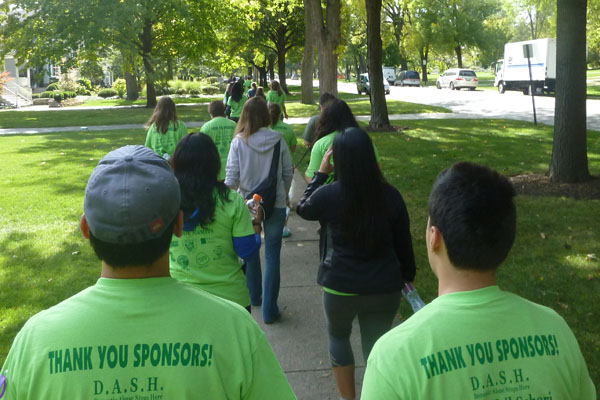
This October was the first year in six years that RB did not host its traditional Day of Service. Instead, the whole month became the Month of Service, and Bulldogs were encouraged to find volunteer opportunities in the community.

 According to Assistant Principal Tim Scanlon, part of the reason for the change was Day of Service’s success. There was too much demand from the community for a single day.

 In addition, the school board had made some financial cuts that made it much more difficult for a Day of Service to be organized. Social studies teacher Angela Ziola lost a release period related to Character Counts which she had used in previous years for a variety of activities, including coordinating the Day of Service. She also lost the stipend for her assistant SA sponsor, John Fields, who had helped coordinate the Day of Service. Finally, most of the secretarial support that had organized the Day of Service wasn’t available.

 “We didn’t have all the necessary infrastructure,” said Scanlon.

 So was the Month of Service a success?

 Last year, over 500 students, staff, and parents participated in the Day of Service. This year, however, the students found opportunities on their own, and the school couldn’t keep track of who volunteered.

 “Not a lot of groups talked about [keeping track],” said Social Studies teacher Angela Ziola.

 “I missed the Day of Service,” said Scanlon. “The sense of team effort can’t be replicated without doing it as a Day of Service.” However, he added, “There’s something very limiting about having a Day of Service.” He felt like some people would do the Day of Service and feel like they were then done giving back for the year. “I think the Month of Service was very successful,” he said.

 “I missed the energy on that day and how there was always such a large amount of students, staff, and parents,” said Ziola.

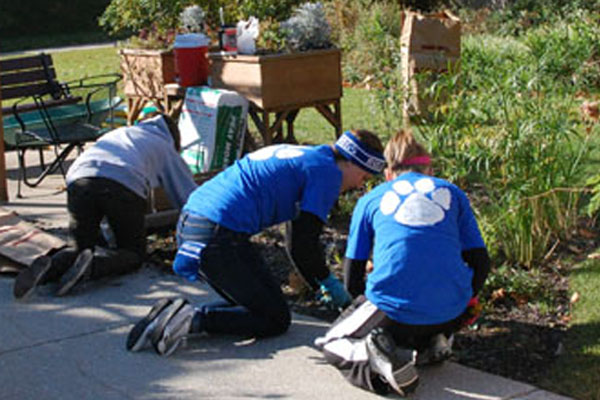
 Sophomore Laura Pellizzari participated in the Day of Service last year and had a great time on the workday. “It was an all-around good experience!” she said. “We cut down and burned buckthorn and invasive species in the zoo woods. It was tons of fun and afterwards we all got our t-shirts and food.” 

 Despite her good experience, Pellizarri did not participate in Month of Service this year. “I kind of forgot about it,” she said. “I had heard about it, but I never really found out any information. Last year it seems it was made much easier to do something for the community.”

 On the other hand, Sophomore Brazil Lewis-Boursaw did not participate in the Day of Service last year, because she was more focused on getting used to the school. This year, she did participate in Eco Club’s October workday. “It was really fun and I’m happy I got to do it because I didn’t do it last year and I wanted to be more involved,” she said.

 Lewis-Boursaw prefers the Month of Service to the Day of Service. “It gives you more of a chance,” she said. “You have more options, and it’s more help, too.”

When asked about plans for next year, Scanlon said, “I would love to have a Day of Service and a Month of Service… To incorporate the Day of Service into the Month of Service.”

Ziola was not as optimistic. “I don’t know how we can do a Day of Service with the cuts,” she said, but added, “I think a month could work, just not one single day.”

31 days of service

October 4, 2011 by  
Filed under News, Top Stories

What happened to the Day of Service? This year, administrators have decided to institute a Month of Service instead of the traditional Day of Service. During the entire month of October, there will be multiple service opportunities that will be offered to students.

Assistant Principal Tim Scanlon said, “RB has a long tradition of community service. In the past years there has been the Day of Service. There are many service opportunities throughout the community. There are too many for one day.”

Scanlon said, “This allows the students to serve more because it provides a longer time slot and gives them more variety of service opportunities.”

Administrators think this new idea is projected to have great outcomes. Scanlon said, “I think the students will have a typical RB response, positive, enthusiastic. There will be a lot of people signing up, classes and individuals.”

When asked about the Month of Service, senior Nina Pelizzari said, “I am a little skeptical about it. The people that are involved with the school will remain involved, but the Day of Service was very organized and pushed people to become involved who usually wouldn’t be. It’s kind of sad to see the tradition go away, so who knows how it’s going to turn out.”

Depending on the results of this month, administrators are going to decide whether or not they will continue the Month of Service in the following years.

Scanlon said, “RB does not have a required number of service hours. There are an outstanding number of service hours that students have received. They know it’s the right thing to do.”

There are many organizations involved with the Month of Service. Here are a few that students can become involved in:

  • Project NICE/Brookfield: October 22, 2011 contact: juliej@cep4youth.org
  • Ecology Club: contact: montid@rbhs208.org
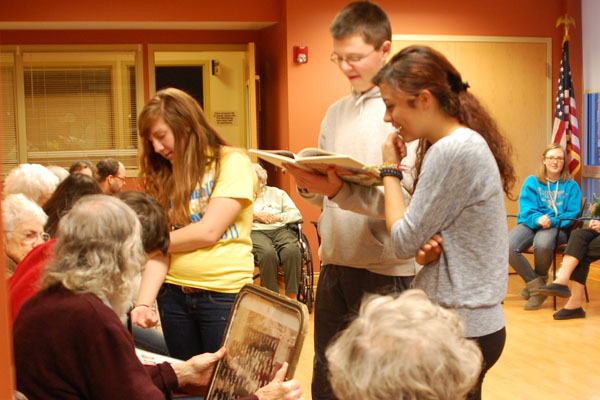
  • British Home Visits: every Wednesday 3:25-4:45 contact: beasleyj@rbhs208.org
  • Riverside Beautification Day: October 29, 2011 contact: terri.lynne1@hotmail.com
  • LaGrange Park District Halloween Party: October 28, 2011 contact: dianefaught@pdlg.org
  • Pro SE Service: contact: dknox@proservices.org

For more information on service opportunities going on through the Month of Service, contact Assistant Principal Scanlon or go to www.rbhs208.org.

Scanlon said, “Education without service is a job unfinished.”

ALSO RELATED:
You can view the school’s Month of Service flyer and their List of Service Organizations here.

Vegan restauranteurs, EPA, and dairy farmers visit SEE Team

March 11, 2011 by  
Filed under News

SEE team is known to have fun field trips and environmental-based classes, but on Monday February 28, local people that are involved in environmental careers came to give SEE team a presentation on what they do.

The presenters had jobs from Brookfield Zoo workers to biology professors to dairy farmers and even RB’s assistant principal Tim Scanlon. But the biggest hit of the group were Danny and Kathy Living of Borrowed Earth Café in Downers Grove.

“Danny and Kathy were my favorite ones there. They were really cool and nice,” said freshman SEE team student Kate Alaks.

“The restaurant people were really awesome. They were so interesting,” said fellow SEE team student Justin Griggs.

Danny and Kathy’s restaurant is an all vegan café called Borrowed Earth Café. Vegans not only don’t eat meat, but there are no animal products such as dairy or eggs in the food either.

“We chose to open a vegan restaurant because we wanted to share the kind of food we eat with as many people as possible,” they said.

The owners have been vegan for six years and the restaurant has been open for three.

“Organic, vegan food has the smallest carbon footprint of any kind of restaurant. In addition, we compost all our food scraps during the growing season, we use corn and sugar cane take out packages, and bio-degradable take out bags,” they said.

Danny and Kathy do not have plans to expand their restaurant at this time. “We love our restaurant the way it is. Our customers consider us and our energy to be just as key an ingredient in the experience as the spices, nuts, seeds, vegetables and fruits that go into the recipes. The two tenets of our mission statement are feed and educate. While there’s something so truly American about expand and make a nationwide chain, trucks with your name on it, boxes in your grocery store, etc., there’s also something beautiful about something precious that’s appreciated in the size that it is without a desire to make it bigger,” they said.

The experience as a whole was great for everyone involved.

“I think the students really enjoyed being exposed to real people who practice the environmental topics they study in class. The panel discussion provided an opportunity for the students to ask questions to panelists and the students were engaged in a very natural back-and-forth conversation.  As a teacher, i was very excited to see my students take part in such a serious, adult-like activity,” said SEE team teacher Jennifer Waldock.

“We may play around with the format and allow for a informal mingling section, but we definitely want to do the panel again in some form,” Waldock said.

Eco-Action team expanding to make a difference

February 1, 2011 by  
Filed under Features

Science and SEE Team teacher Jame Holt has been working on a new group to make RB a greener school. This Eco-Action team has entered contests through the Eco-Schools program to make schools become more eco-friendly and save money on energy.

At the club’s beginning in November, there were about 10-12 students involved, with club creator Holt and assistant principal Tim Scanlon supporting it. They recently had a meeting with other faculty members to form a small committee of people interested in EcoSchools. Some faculty members that are now involved are Adam Gibbons, Jessica Mauritzen, Kathleen Harsy, Suzanne Bartelson, Mark Schaedel, Dan O’Rourke, Dave Monti, and Doug Schultz.

“I’m a member of the World Wildlife Foundation and the Nature Conservancy. I’ve always been interested in nature and the environment,” said Gibbons.

Each faculty member has a different role within the group.

“I’m in charge of research for the audit. There is a wind farm by Heston Wind that three schools are buying power from. I am going to try to find out if we can buy power from them as well,” said Gibbons.

The Eco-Action team is having an environmental auditor come to the school to audit the building to see how we are using resources and our ecological footprint. They will then recommend changes that the school should make. The audit should be done by spring break.

“I think it will be eye-opening for a lot of people to see how much we’re using. It will give us information of many misconceptions and myths regarding recycling, printing, and how we should be doing it,” said Holt.

There will be an assembly towards the end of February during science classed. Alliance for Climate Education (ACE) will be doing the presentation.

The Eco-Action team still has not heard results of the last challenge they entered through EcoSchools, but once they do, they will start looking for grant opportunities.

Any students or staff interested in this club should see Jame Holt in the science department.

Rooftop garden: one step closer to a green school

November 9, 2010 by  
Filed under Features

English teacher Kathleen Harsy is the main advocate for a rooftop garden atop our very own RBHS. A rooftop garden is just what it seems to be: a garden on top of a building, used to grow vegetables and herbs, reduce energy costs, and just overall make greener choices.

Although Harsy is head of this project, there are many other people involved. Tim Scanlon, Kirstin Bacon, Tom Dignan, John Izaguirre, and the SEE team students and teachers Jame Holt, Jennifer Waldock, and Dan Mancoff are all involved in the garden, and will be reaching out for more support.

The purpose of a rooftop garden at RB is basically to have an interactive green space. Students can actually do something instead of just sitting and learning in a textbook. It expands on the fact that the green movement isn’t just a fad, but it is how the world really works now. The garden also creates interdisciplinary opportunities within the school, meaning that English could coincide with the science department in projects concerning the garden.

Harsy said “[The garden would] foster a new generation of environmental stewards.” There are connections to the Character Counts program with the garden, as well has being able to make direct lesson plans to reflect upon it.

“Kids get so excited about it. They think going up to the roof is so cool,” said Harsy.

A rooftop garden could reduce energy costs and allow students and staff to interact with a living ecosystem. Not only that, but students and staff could actually consume the vegetables and herbs that will be grown in the garden, which could improve the food choices in the cafeteria. 

Part of the funding for the garden is coming from last year’s senior gift, which is when the idea really got kicked off. It is not funded by the school, so Harsy and others are in the process of getting outside grants to fund the rest of the garden, which will be about $5000. 

The restaurant Uncommon Ground has a rooftop garden, and Harsy has been in contact with them about RB’s plans for one.

Safety is not an issue because the school already has easy and safe access to the roof.

“Administration is really open to this idea. It really speaks to how committed they are to the best practices for teachers and students,” said Harsy.

Dedication to the renovation

March 26, 2010 by  
Filed under News

On Sunday March 21st, RB held a dedication ceremony to celebrate the completion of the $52 million renovation.  Anyone in the RB community was welcome to attend the event which was held in the recently completed new auditorium.

The ceremonial ribbon was cut on the auditorium stage by Interim Principal Tim Scanlon and school board president James Marciniak.  Members of Student Association and faculty were invited on stage to help hold the ribbon.  The RB choir, band and orchestra were also present on stage to do musical interludes throughout the ceremony.

Student Association Executive Board members Stephanie Duve and Zeyne Guzeldereli gave speeches about their experiences during the renovation period.  Scanlon, as well as Assistant Principal John Passarella and some of the head construction workers who worked on the project, also gave speeches.

Passarella gave his speech commemorating his predecessor Bill Lehotsky, who passed away from cancer this past year.  Room 201, one of the newly renovated rooms in the building, was dedicated to Lehotsky in honor of his memory.

SA Student President Kelly Sherman also put together items for a time capsule that will be used to show a future generation of RB students what the school was like at this time.  The time capsule will be stored between walls in student services and will be opened in 50 years.

Some of the items in the capsule include: playbills, a lunch menu, state universities at a glance, a cheerleading uniform, a pom pom, a homecoming party favor, a community of caring key chain, an RB flag, a yearbook, and a recent hard copy issue of the Clarion.

“I was honored to be able to put together the time capsule,” said Sherman, “These items exemplify the RB community today.”

After the official ceremony took place in the auditorium, interested community members were led on tours by students who showed them the best features of the renovation.  This included the reconstructed science labs, the new community accessible fitness center, the reconstructed swimming pool and the redesigned cafeteria kitchen and serving area.

Students, staff adjust to new tardy policy

March 18, 2010 by  
Filed under News

Tell us what YOU think about discipline at RB. Take our survey!

RB has been operating under a revised tardy policy since the beginning of the second semester. The policy has become the talk of the students, as well as the staff at RB. The policy was reconfigured by Interim Assistant Principal Troy Gobble, Interim Principal Tim Scanlon, Assistant Principal John Passarella, and Dean David Sibley after many teachers showed concern with the issue.

The tardy policy is not entirely new. According to Sbley, “it’s the old policy, with some tweaks.” One of those tweaks is a renewed emphasis on consistent enforcement of the policy by staff and teachers. Teachers are also now required to call a student’s parent or guardian if they have received three tardies. A guideline has been established for the new punishments, including a Saturday detention after the fourth tardy, and an ADA (alternative daily assignment) after the sixth.

Another change to the policy is that tardies are being responded to more quickly than before. Students are now likely to be called down to the office the same day they receive a number of tardies.

To explain the reason for the changes, Gobble said, “What we found was that the policy had become difficult to enforce consistently, and for good reasons. Students and teachers were adjusting to a new building and nobody knew where they were going, and also teachers were just getting used to using Skyward. As a result, tardies became more frequent than they were in the past. Students were coming late to class because the policy felt undefined.  Now that it has been tightened up, the number of tardies has dropped significantly.”

Sibley agreed and said, “it’s getting better. Once kids started realizing they were getting ADA’s for tardies, they were more motivated to get to class on time. The teachers are doing a great job enforcing [the policy], and are really making a difference.” Sibley feels that the vast majority of the teachers are cooperating with the new policy.

Gobble noted that the biggest problem had been first period. He said, “[There were] as many tardies to that period alone as the amount of tardies to any period for the remainder of the day. My first thought was maybe the students were just having trouble getting to school, but we found that was not the problem. We got a map of the school district, and plotted on the map the homes of the students late to first period, and found that there were just as many tardy students from the Hollywood area as there were Broadview and North Riverside.”

Gobble also said there was a day where staff members were posted at each door of the school to count the number of students coming in after the bell rang. They ended up counting 20 students that arrived to school late, but received 50 students tardy to first period that day, leading them to believe the other 30 students were in the building on time but still arriving late to class.

“I think it’s just the high school culture that the morning is the time for students to socialize with their friends,” said Gobble.

Social science teacher John Fields served on this year’s discipline committee. Fields, as well as a number of teachers from RB on the committee, were given the task of compiling a survey for the rest of the teachers about discipline at RB.

“[The survey] gauged how teachers felt about certain issues” said Fields.
Several of the questions on the ten question survey asked about tardiness and attendance.

“I have not yet analyzed the results,” said Fields, “but I think it’s always good to evaluate how things are going.”

The new attention to attendance and tardies has resulted in other changes. Attendance is now posted live on Skyward, so parents can check to see if their student is in class at any point during the school day.

Spanish teacher Jenna Passananti said, “[The new policy] has helped tremendously. In my classes [tardiness] has improved, and the kids are seeing it as more of a priority to get to class on time and are realizing that those two to three minutes in the beginning of class are still part of class. This policy allows the teachers to find their own tardy policy with in their classroom, and if it gets out of control, we have a uniform school policy to fall back on. It really bothered me when students didn’t get to class on time. Any improvement helps.”

Social Studies teacher Dan Monahan has his own views on the policy. He said, “Until there are no tardies, it’s not harsh enough. In my classes personally, I’ve noticed a slight improvement. We’ll analyze the data at the end and see if it has improved.” Monahan said he noticed “no change in behavior from the students,” and still notices kids in the halls after the bell rings.

Monahan also said, “My personal belief is that the punishment doesn’t need to be more or less, but that it needs to be different. I don’t feel that students care about getting detentions, or that they change the student’s behavior at all. If it’s not uncomfortable enough to get the students to stop, then it should be changed.” He suggested that the school should seek alternate consequences for tardies, such as revoking parking permits, or participation in Sixth Man and other school events.

English teacher Sarah Johnson said, “If we aren’t all on board it doesn’t work. Any policy is only as strong as the people adhering to it.”

Many of the students at RB don’t feel as optimistic about the policy, noting flaws with the policy’s structure.

Junior Kylin Collier said, “It’s too ridiculous because the school can’t expect a student to be on time to every class if they have seven classes every day. When they keep handing out detentions it just frustrates the students and takes away from the learning. There are still people tardy every single day.”

Junior Watoris Slater said, “If you’re one minute late, then you may as well just skip the class because you’re going to get a detention anyway.”

Junior Brendan Mortimer said, “It doesn’t work because it doesn’t get enforced right. The teachers play favorites, kids that the teachers like never get marked tardy, but the kids they don’t like always get marked tardy.”

Sibley noted how punishments were decided. “We just follow the handbook, and there are certain things we are mandated by the state to do. The state requires us to follow the guidelines set forth by the Board of Education. Don’t be tardy and you won’t have to see me,” he said.

Familiar faces, new jobs

October 8, 2009 by  
Filed under Features

With the resignation of former Superintendent-Principal Jack Baldermann over the summer, the look of RB’s administration has changed.  Dr. David Bonnette has taken over the role of Interim Superintendent, while the role of Interim Principal has gone to Tim Scanlon, formerly the Assistant Principal of Curriculum and Instructions.  The assistant’s role has been passed to Troy Gobble, formerly the school’s Science Department Chair.

Dr. David Bonnette, Interim Superintendent
Educational Backround:
Undergrad, Hope College – Holland, MI
PhD, University of Michigan- Ann Arbor

1. What was your previously held office?
I was the superintendent for District 96 for 13 years and I retired in June of 2005. For two years after that I directed a school leadership program at Northeastern Illinois University. I was then contacted to be interim superintendent for District 90 in River Forest. After that I thought that I was really retired.

2. When did you decide to start working at RBHS/ How were you notified about the opening?
I was approached by a board member regarding the interim position after [former Superintendent Principal, Jack] Baldermann resigned. From there, I was interviewed by the Board and hired for the position.
Since I live near the school and have always had a vested interest in RB, I accepted the position.

3. What’s your favorite part of your job?
Being able to renew relationships with kids I knew from Hauser and being able to form friendships with new acquaintances with kids who went to Komarek and Gross. What attracts me to my job is being able to help kids be successful.

4. What are your goals for the 2009-2010 school year?
My goals for the school year are to really involve the community, work with the staff more, and take RB’s already strong reputation and build on that. The district is facing some financial hardships, and I have been working with a state wide group for a few years now and our goal is to increase school accountability and better the method by which the state funds schools.

Mr. Tim Scanlon, Interim Principal
Educational Backround:

Masters Degree in English from St. Xavier University in Chicago
School Administrative Certificate from Governor State University

1. What was your previously held office?
For the past few years at RBHS, I have been serving as Assistant Principal.

2. When did you decide to start working at RBHS? How were you notified about the opening?
I came to RBHS because of the outstanding reputation of its staff and students. Additionally, at that time, the position at RBHS gave me an opportunity to concentrate on staff development and curriculum which constituted my dream job. Finally, Mr. Baldermann was an excellent educational leader, and I wanted an opportunity to work with him.

3. What’s your favorite part of your job?
Reflecting with teachers on strategies, assessments, and curriculum are my favorite aspects of this job. Lately, however, I seem to miss more and more being in the classroom, but there will be time for that in the future.

4. What are your goals for the 2009-2010 school year?
I want to maintain our academic excellence, spend more time in the classrooms, and finish the construction project. Also to help RBHS to make a smooth transition to a new administration

Mr. Troy Gobble, Assistant Principal
Educational Backround:

BS in Chemistry Education from University of Illinois at Urbana
MS in Physics from Eastern Illinois University
MS in Educational Leadership from Benedictine University
Plans to finish Doctorate in Educational Leadership from DePaul in 2010.

1. What was your previously held office?
I was the Science Department Chair and a Physics teacher.

2. When did you start working at RBHS/ How were you notified about the opening?
I began at RBHS in 2001 and served as the department chair for 8 years.

3. What’s your favorite part of your job?
As the Assistant Principal for Curriculum and Instruction, I am very excited to watch teachers in the building practice their craft and talk about ways to improve instruction and student learning

4. What are your goals for the 2009-2010 school year?
Personally, my goals are to be a good dad and husband, and to complete my doctorate coursework. Professionally, I want to continue to learn and grow as an educator and help others to do the same